Servo-ControlledHigh-Pressure Coolant Supply System
Model: SCPW-09 (max. pressure 70 bar)
- Low temperature rise: Full-servo pressure-tracking supply does no unnecessary work: coolant rises only 5–6 °C above ambient (depending on machining conditions), so less thermal distortion and more stable dimensions.
- Low energy consumption: Pressure and flow follow what the tool actually needs, never running at full load for hours — about 10 kWh per 8-hour shift (conservatively estimated at 100 bar full load).
- High efficiency: Pressure builds the moment the NC starts, with stable pressure and reliable chip evacuation; on tool change the line vents automatically while a trickle keeps flowing, protecting the turret and keeping chips out of the tool.
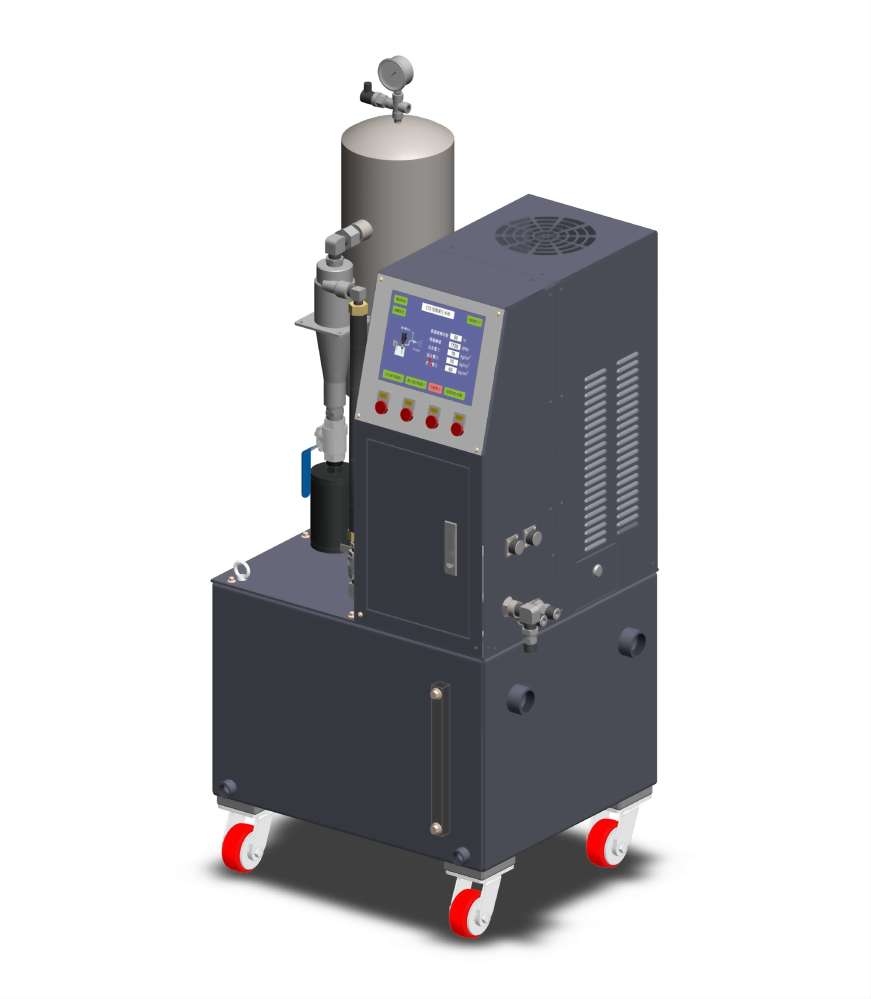
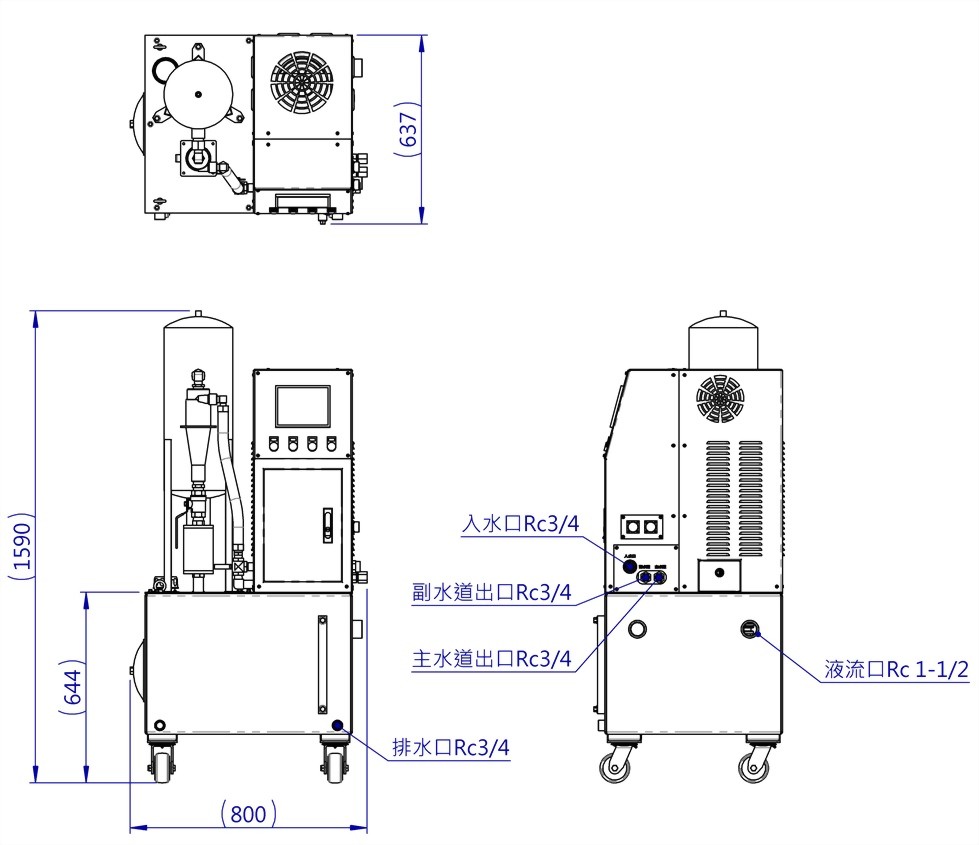
- Small footprint: 800 × 640 mm — about 0.5 m², sits beside the machine without blocking the aisle.
- Low-consumable filtration: VDF cyclone filter as standard (no consumables, high precision), backed by a stainless-steel bag filter and two-stage fine filtration — low filter cost.
Energy & efficiency figures
About 10 kWh per 8-hour shift (conservatively estimated at 100 bar full load)
Calculated for a Ø1 mm nozzle (0.785 mm² orifice), 70 bar, 18 cc/rev high-pressure pump, cutting oil.
5–6 °C
Tank temperature rise above ambient — less thermal distortion, more stable machining
Full servo drive
Output follows the pressure and flow actually demanded, no running at full load all day
800 × 640 mm
Footprint of just 0.51 m²
| Item | Value | Basis |
|---|---|---|
| Coolant flow | 3.7–4.8 L/min | Orifice equation Q = Cd × A × √(2ΔP/ρ), jet velocity ≈ 127 m/s; sharp-edged hole Cd≈0.62 → 3.7 L/min, drilled nozzle Cd≈0.8 → 4.8 L/min |
| Pump speed | ≈ 240–330 rpm | 18 cc pump: 210–265 rpm theoretical; low-viscosity cutting oil at 70 bar leaks more internally, so 80–85% volumetric efficiency is assumed |
| Continuous torque | ≈ 23 N·m | T = V × Δp ÷ 2π ≈ 20.1 N·m plus mechanical losses; servo sizing is driven by torque, not speed |
| Hydraulic power | 0.43–0.56 kW | Pressure × flow ÷ 600 |
| Power draw (conservative) | ≈ 1.0–1.4 kW | Conservative ceiling estimated at 100 bar full load: hydraulic 0.72–0.93 kW, motor shaft ≈ 0.85–1.15 kW, plus drive and motor losses; roughly 10 kWh per 8-hour shift |
The servo system only works when the tool calls for coolant, instead of running a fixed-displacement pump at full load all shift — even estimated conservatively at 100 bar full load it is only about 10 kWh per 8 hours, with just 5–6 °C of tank temperature rise.
| Model | SCPW-09 |
|---|---|
| Max. operating pressure | 70 bar |
| Max. flow rate | 30 L/min |
| Motor | 7.5 kW / 220 V |
| Max. speed | 2000 rpm |
| Filtration | 50 μm |
| Compatible fluids | Water-soluble coolant or neat cutting oil |
| Footprint | 800 × 640 mm |
Specifications are subject to change without notice. Contact us for other pressure or flow requirements.
| Type | Piston pressurization | Screw pressurization | |
|---|---|---|---|
| Category | Crankshaft | Swash plate | Screw |
| Vibration / pulsation | High | Low pulsation | Minimal |
| Noise | High | Low | Minimal |
| Efficiency | Average | High | High |
| Self-lubrication | Lubricant required | Not required | Not required |
| Pressure compensation | None | Built-in compensation | None |
| Maintenance cost | Low | Low | Not repairable |
| Market price | Average | Average | Very high |
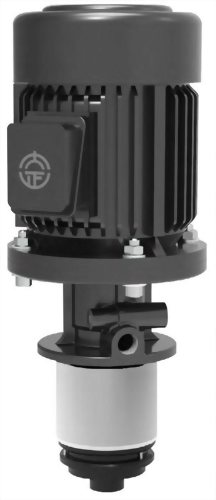
※ The highlighted swash-plate type is the pressurization method adopted by Propiston.
Frequently asked questions
What customers ask most about the servo-controlled high-pressure coolant system.
Which machining jobs is this system for?
CNC lathes and machining centres that need through-spindle high-pressure coolant: deep-hole drilling, drilling and tapping, and chip control on difficult materials such as stainless steel and titanium. High-pressure coolant flushes chips out of the hole and reduces bird-nesting and tool breakage.
What are the maximum pressure and flow?
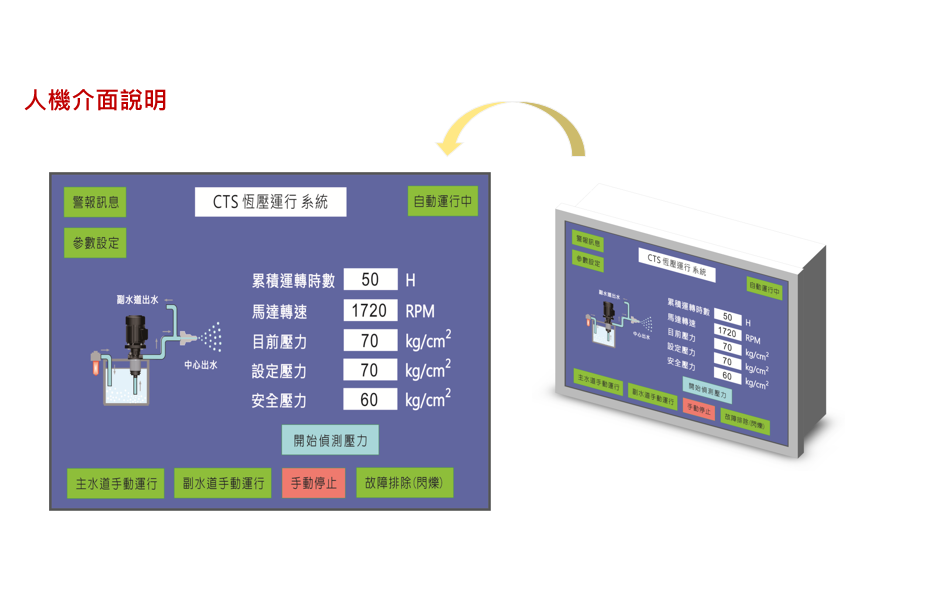
The SCPW-09 delivers up to 70 bar and 30 L/min. Actual flow is set by the nozzle: a Ø1 mm nozzle at 70 bar passes about 3.7–4.8 L/min. Pressure is set directly on the controller.
Why does it use less energy than a fixed-displacement pump?
A fixed-displacement pump runs at full load all shift and the surplus flow turns into heat and electricity cost. The servo drive delivers only the pressure and flow the tool needs at that moment — even estimated conservatively at 100 bar full load, that is about 10 kWh per 8-hour shift.
How much does the coolant heat up? Do I need a chiller?
Because no surplus work is done, coolant rises only about 5–6 °C above ambient (depending on machining conditions), so thermal distortion stays small. Whether a chiller is needed depends on the heat load of your process — send us your cutting conditions and we will assess it.
Can I run water-soluble coolant or neat cutting oil? How is it filtered?
Both. A VDF cyclone filter (no consumables, high precision) is standard, backed by a stainless-steel bag filter and two-stage fine filtration to 50 μm. Pair it with Dr.Coolant monitoring to keep concentration and level under control.
How big is the unit and what does installation need?
The unit is 800 × 640 mm — about 0.5 m² — and sits beside the machine. Power is 220 V with a 7.5 kW motor. Piping and mounting dimensions are on the "Installation dimensions" tab of this page.
What happens to line pressure during a tool change?
The system vents automatically when the machine stops for a tool change, so residual pressure cannot damage the turret or upset positioning, while a small flow continues to keep chips out of the tool. The high-pressure pump is also available on its own — see the high-pressure coolant pump.