

Dr. CoolantCoolant Doctor
Factory coolant digital monitoring — let data safeguard your cutting fluid
With sensors and cloud logging, track coolant concentration, pH, conductivity and ORP in real time. Paired with LINE instant alerts and AI diagnosis, you extend tool life and cut downtime and waste.
Unmanaged coolant burns money
🦠 Odor & spoilage
Imbalanced concentration / pH lets coolant rot and breed bacteria, hurting the work environment and yield.
📋 Paper logs are hard to track
Manual readings pile up, numbers don't add up, and root causes are hard to find when problems hit.
🔧 Shorter tool life
Unstable coolant accelerates tool wear and lowers machining quality, driving up cost.
Four Health Indicators — like a body check-up
Just as you measure blood pressure and blood sugar, your coolant needs these four checked regularly.
💧 Concentration (Brix%)
≈ Blood sugar
Too low = not enough “nutrition”: rust protection and lubricity drop, parts rust and tools wear faster. Too high = wasted cost, plus foaming and skin irritation.
Normal range
🧪 pH
≈ Body pH
Too low (acidic) = coolant is rotting; machines and cast-iron parts rust. Too high (alkaline) = skin irritation, and the prime culprit behind aluminium staining.
Normal range (for aluminium, keep 8.5–9.0)
⚡ Conductivity (μS/cm)
≈ Blood pressure
The higher it reads, the more impurity ions in the water (chips, calcium / magnesium, metabolites). Like high blood pressure straining the vessels, high conductivity means the coolant is “aging”.
Normal range
🛡️ ORP (mV)
≈ Immune system
High ORP = the coolant has resistance, is oxygen-rich and suppresses bacteria. Low ORP = weak immunity, anaerobic bacteria are about to bloom. ORP is an early-warning system: it detects bacterial growth days before any smell appears — if left untreated, foul odor follows within days.
< 0 critical・< 50 low・≥ 50 normal (higher is better)
Features
📱 LINE real-time war room
Anomalies are pushed to LINE instantly — act the moment something is off, no need to sit at the PC.
🤖 AI diagnosis
The system analyzes trends and gives a professional “prescription” — prevention over cure.
🏭 Supplier war room
Coolant suppliers can monitor customers remotely, serve proactively and build loyalty.
📈 Daily logging & optimization
Scan to register, log daily, analyze and optimize — building a digital record of your factory's coolant.
📊 War Room Overview
Monitor every machine's coolant status in one place — concentration, pH, ORP and conductivity in real time, with green / yellow / red alerts. See at a glance which tank is off and act immediately, no tank-by-tank rounds.
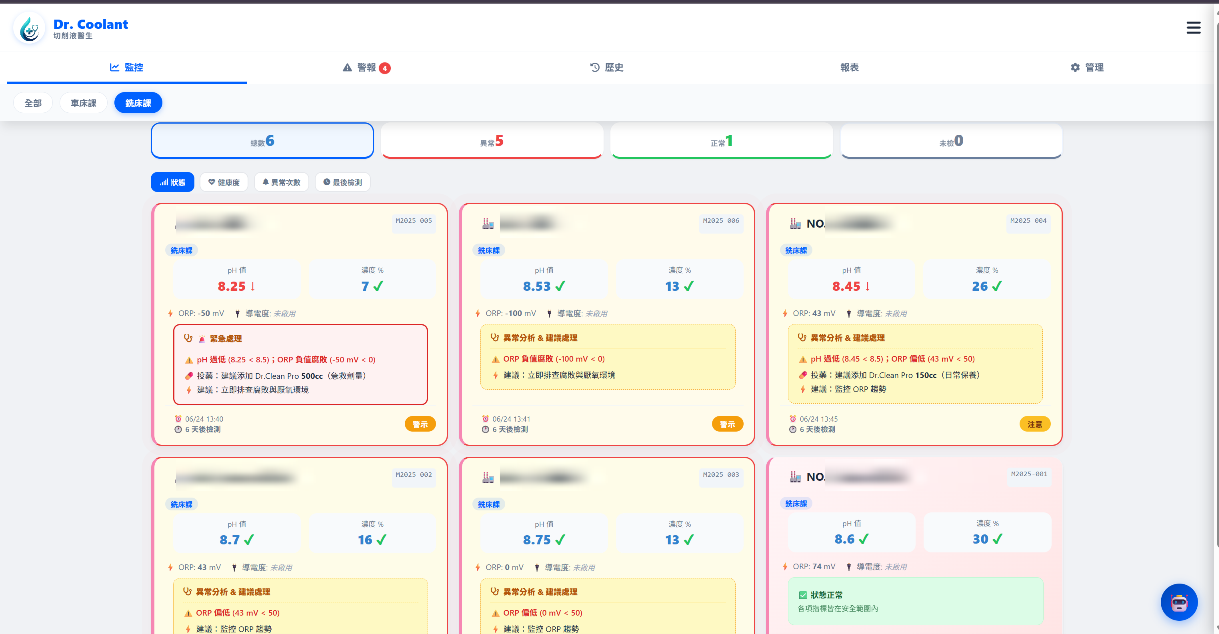
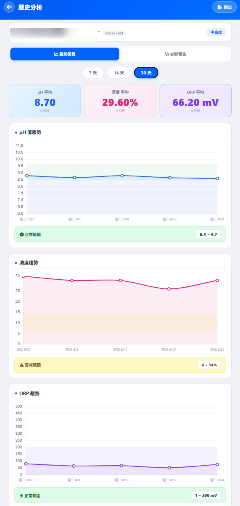
Single-machine trend analysis (pH / concentration / ORP)
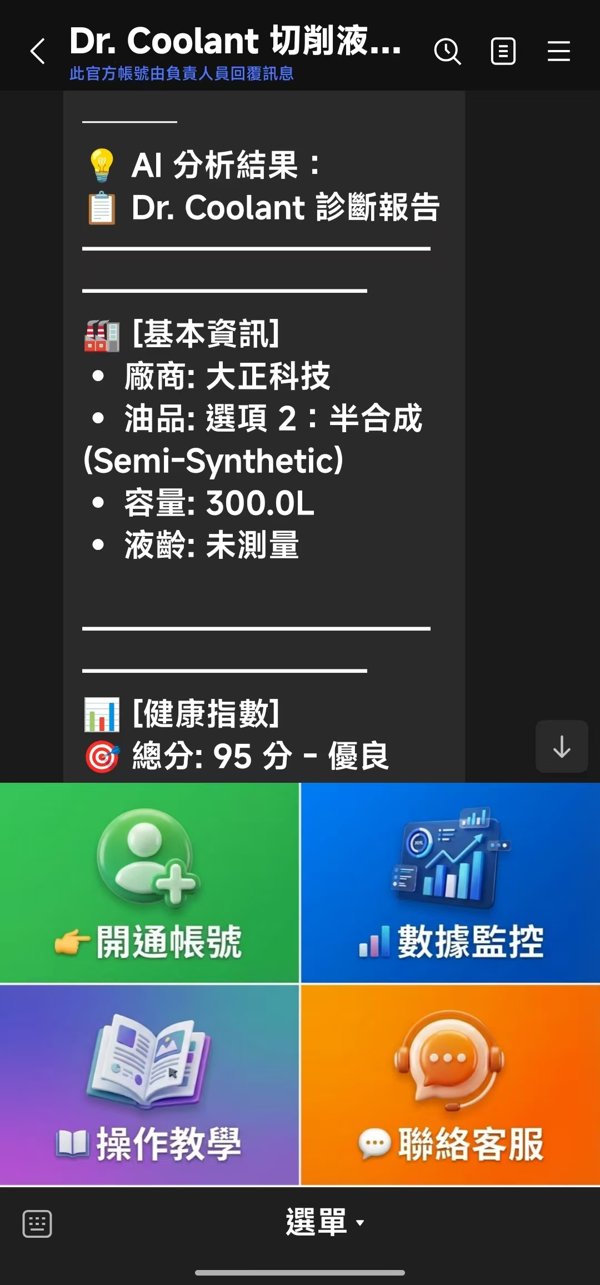
LINE official account — alerts & menu
Three steps to start
① Scan & register
Add the LINE account or open the registration page, choose “factory customer”, fill in company details and bind LINE.
② Log daily
Measure and upload daily to build a coolant data record.
③ Analyze & optimize
Watch trends, receive alerts, adjust on AI advice — extend fluid and tool life.
Frequently asked questions
What customers ask most about Dr.Coolant monitoring.
What is Dr.Coolant?
A digital monitoring system for shop-floor cutting fluid: concentration, pH, conductivity and ORP readings for every machine are recorded in the cloud, a dashboard shows each machine with green / yellow / red status, out-of-range readings are pushed to LINE instantly, and AI analyses the trend and suggests what to do — replacing paper logbooks.
What are the normal ranges for the four indicators?
Concentration (Brix) typically 6–10%; pH 8.5–9.5 (8.5–9.0 recommended for aluminium — too high blackens aluminium, too low means rust and odour); conductivity about 1000–3000 μS/cm, higher means the fluid is ageing; ORP ≥ 50 mV is normal, below 0 mV is urgent — the higher the better.
Why monitor ORP?
ORP is the coolant's "immune system": a high value means enough dissolved oxygen to suppress bacteria, a falling value means anaerobic bacteria are about to multiply. ORP detects bacterial growth days before the tank smells, which makes it the most valuable early-warning indicator — act early and you avoid the odour and a fluid change.
Do I need to modify the machine or install hardware?
No machine modification. Measure daily with the instruments you already have (refractometer, pH meter, conductivity / ORP meter), scan the QR code and upload. Three steps: register by QR code, record daily, analyse and optimise.
How do I receive alerts?
Through the LINE official account: abnormal readings are pushed to your phone right away, so nobody has to sit at a PC. The LINE menu also shows per-machine trends for pH, concentration and ORP.
What does it cost?
Activation is free, and use is free for up to three machines; contact us for larger plants. Add the LINE account or open the registration page, choose "factory customer", enter your company details and link LINE.
Can coolant suppliers use it too?
Yes. The supplier dashboard lets a cutting-fluid supplier see the coolant condition of every customer machine remotely, so they can service proactively and build loyalty.
Can it be combined with hardware?
Yes. Pair it with the high-pressure plunger coolant pump or the servo-controlled high-pressure coolant supply system — one source for both supplying and caring for the coolant.
Ready to let data safeguard your coolant?
Activate free and get started.
* Dr.Coolant pairs with PROPISTON's High Pressure Coolant Pump, Servo-Controlled High Pressure Coolant Unit and other coolant hardware — from supply and care to cleaning, all in one.